
1. What is IM3 corrosive environment?
IM3 is one of the submerged or buried corrosive categories defined in the ISO 12944-2 standard, specifically referring to wet soil environments. This type of environment is common in buried storage tanks, steel piles, underground pipelines and other steel structure facilities that are in long-term contact with moist soil. Different from atmospheric corrosion, steel structures in the IM3 environment face compound erosion from continuous moisture, microbial activity and chemicals in the soil, and the corrosion rate is significantly higher than that in the general atmospheric environment.
2. What are the commonly used coating systems for IM3?
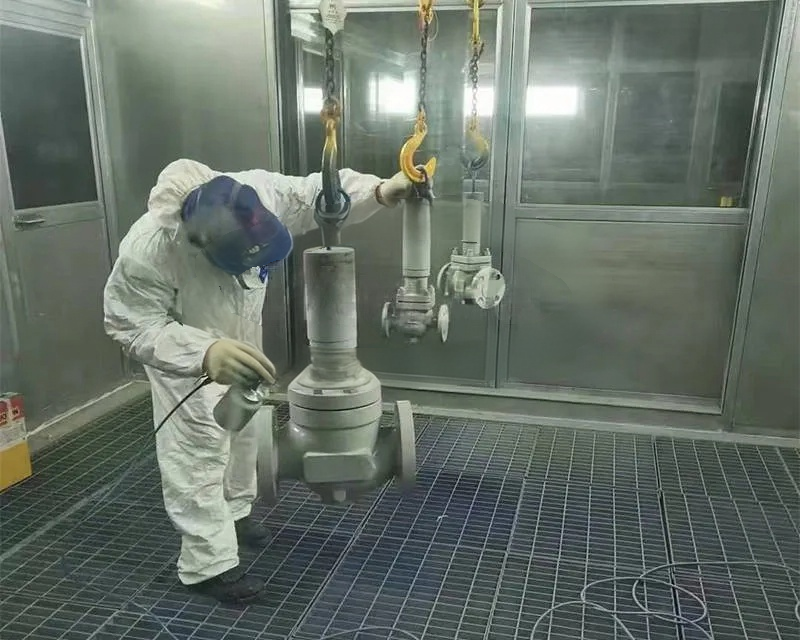
The typical matching package is the three lines of defense of “primer + intermediate paint + topcoat”, with a clear division of labor for each layer:
· Primer (zinc-rich primer): Contains a large amount of zinc powder. It uses the “sacrificial anode” principle – zinc is more active than iron, and corrosion attacks the zinc first, protecting the steel underneath, which is equivalent to buying “insurance” for the steel structure.
· Intermediate paint (epoxy type): thickens the coating, increases density, and acts as a “waterproof dam” to keep moisture and oxygen out.
· Topcoat (polyurethane or epoxy topcoat): The outermost layer of “armor” that resists soil friction and chemical attack.
The total dry film thickness usually reaches more than 300 microns (ordinary paint is only tens of microns), which is very thick.
3. What are the specific functions of IM3 anti-corrosion spraying?
(1) It is suitable for strong corrosion of buried soil and resists soil acid and alkali, moisture and underground microbial erosion.
(2) Prevent electrochemical rust, stray current corrosion, and special protection for underground pipelines
(3) Resistant to groundwater immersion and long-term moisture without paint stripping
(4) Wear-resistant and extrusion-resistant, resisting friction and collision of backfill earth and rocks
(5) Extend the service life of carbon steel flanges and tie rods and prevent them from rusting under underground working conditions
4. What is the core difference between it and ordinary spraying?
(1) Different usage environments – IM3: buried, underground, humid soil and harsh environment; ordinary spraying: indoors, open ground, dry ventilation ring;
(2) Different anti-corrosion levels – IM3: heavy anti-corrosion level (ISO12944 buried level); ordinary: light/medium anti-corrosion, only prevents daily rust;
(3) Paint film thicknesses are different – IM3: thick film coating, the paint film is thicker; ordinary spraying: the paint film is thin, and less material is used;
(4) The service life is different – IM3: it can be used underground for more than 15 years; ordinary spraying: it will easily peel and rust after 3-6 years outdoors;
(5) The materials used are different – IM3: special buried heavy-duty anti-corrosion epoxy paint; ordinary: anti-rust paint, mixed paint, ordinary topcoat;
(6) Applicable accessories – ordinary spraying: open-air pipes on the ground are enough, but will soon corrode underground; IM3: carbon steel flange; rubber soft joint carbon steel tie rod and limit tie rod; carbon steel welded short pipe and pipe; pipe support and hanger, fixed bracket; carbon steel butterfly valve/gate valve body and connection end face; telescopic joint carbon steel shell and limit bolt; underground water pump inlet and outlet carbon steel connectors; pipeline embedded carbon steel connectors.
5. Is the thicker the IM3 anti-corrosion, the better?
The thicker the IM3 buried anti-corrosion coating is not, the better. According to the ISO12944 standard IM3 medium soil corrosion environmental conditions, the optimal total dry film thickness of the coating is controlled at 350~400 μm, and the upper limit of the standard should not exceed 450 μm; the film thickness is less than 300 μm. Because the shielding layer is weak, it is easy to be penetrated and corroded by soil and groundwater media. If the coating is too thick, it will produce a large curing internal stress, which will easily cause the paint film to crack and hollow out, reducing the adhesion of the substrate. It will also make the flange sealing surface and assembly fitting position coating too thick, causing sealing interference. At the same time, it will increase the cost and production period of the coating. The actual construction should use a multi-layer thin spray process of epoxy zinc-rich primer, epoxy cloud iron intermediate paint, and thick epoxy topcoat, with priority to ensure Sa2.5 The quality of sandblasting substrate treatment reaches a balance between anti-corrosion performance, assembly adaptability and cost within the film thickness range specified by the standard.
Post time: Oct-12-2026


