
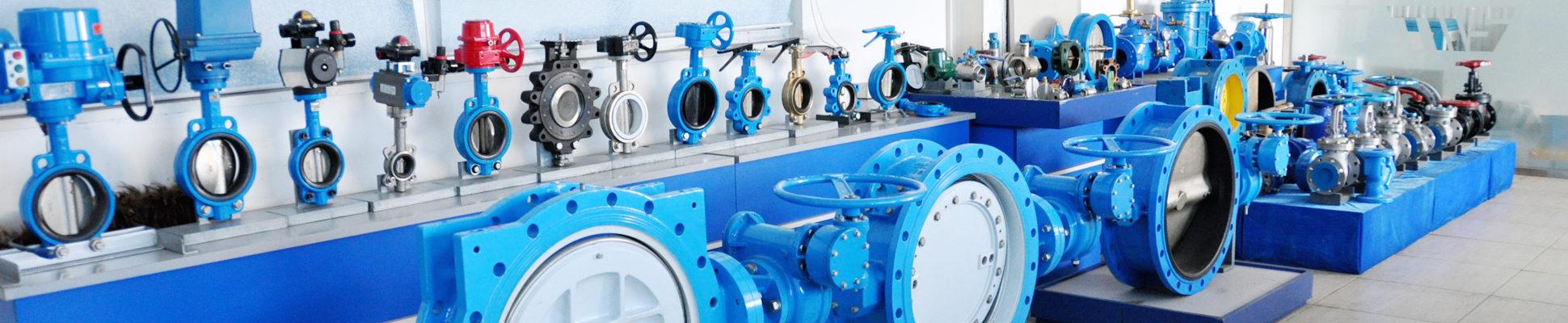
I. Overview of Butterfly Valves
The butterfly valve is a valve with a simple structure that regulates and cuts off the flow path. Its key component is a disc-shaped butterfly disc, which is installed in the diameter direction of the pipe. The valve is opened and closed by rotating the butterfly disc (usually 90°). Because of its compact structure, rapid opening and closing, and low fluid resistance, it has been widely used in many industrial fields.
II. The Structure of Butterfly Valve
Butterfly valves are mainly composed of the following four basic parts:
- Valve body: The shell of the valve is used to connect pipelines and bear pipeline pressure and medium load. Usually there are wafer type, flange type and other structures.
- Butterfly disc: The core opening and closing part of the valve is a disc-shaped structure. Its shape (e.g., concentric, eccentric) and thickness directly affect the performance and flow characteristics of the valve.
- Valve stem: The component that connects the actuator (such as handle, worm gear or electric device) and the butterfly disc. It is responsible for transmitting torque and driving the butterfly disc to rotate.
- Sealing ring (valve seat): an elastic element installed on the valve body or butterfly disc. When the valve is closed, it forms a tight seal with the edge of the butterfly disc to prevent medium leakage.
Accessories: also include bearings (to support the valve stem), stuffing boxes (to prevent external leakage at the valve stem), etc.
III. Working Principle
The working principle of a butterfly valve is very intuitive, similar to a butterfly flapping its wings:
Open state: The butterfly plate rotates around its own axis. When its plane is parallel to the direction of medium flow, the valve is fully open. At this time, the butterfly plate has the smallest blocking effect on the medium, the fluid resistance is small, and the pressure loss is low.
Closed state: The butterfly plate continues to rotate 90°. When its plane is perpendicular to the direction of medium flow, the valve is completely closed. At this time, the edge of the butterfly plate presses the sealing ring to form a seal and cut off the flow path.
Adjustment state: By keeping the butterfly plate at any angle between 0° and 90°, the flow area of the flow channel can be changed, thereby achieving precise adjustment of the flow rate.
IV. Performance Characteristics
Advantage:
- Simple structure, small size and light weight: especially suitable for occasions with limited installation space.
- Quick opening and closing: just rotate 90° to complete opening and closing, easy to operate.
- Small fluid resistance: When fully open, the effective circulation area of the valve seat channel is larger, so the fluid resistance is smaller.
- Low cost: simple structure, less materials, and manufacturing cost is usually lower than gate valves and globe valves of the same specification.
- It has good flow regulation characteristics.
Disadvantage:
- Limited sealing pressure: Compared with ball valves and gate valves, the sealing performance under high-pressure conditions is slightly worse.
- Limited working pressure and temperature range: limited by the temperature and pressure resistance of the sealing ring material.
- Not suitable for media containing particles or fibers: Solid particles may scratch the sealing surface and affect the sealing effect.
- The butterfly plate of large-diameter butterfly valve will produce a certain amount of water head loss.
Welcome to inquire about Tianjin Tanggu Water-Seal Valve Co,.Ltd’s products! Our company specializes in butterfly valves, and also performs well in the fields of gate valves, check valves and balancing valves. We look forward to serving you.
Post time: Dec-03-2025


