
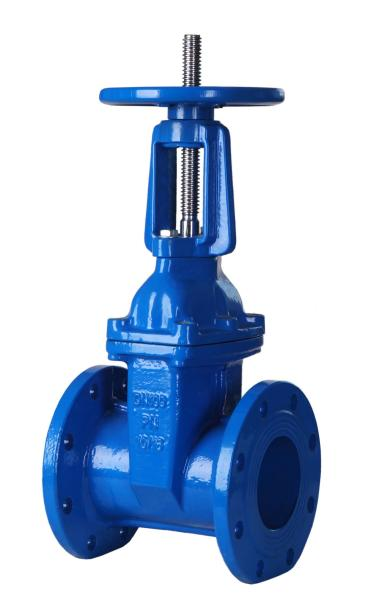
1. What is the rising stem gate valve?
The stem nut of the rising stem gate valve is fixed on the valve cover or bracket. When opening and closing, the valve stem rotates and lifts, and the threaded part is always exposed to the outside. As the gate rises and falls, the valve opening can be visually judged from the exposed length of the valve stem.
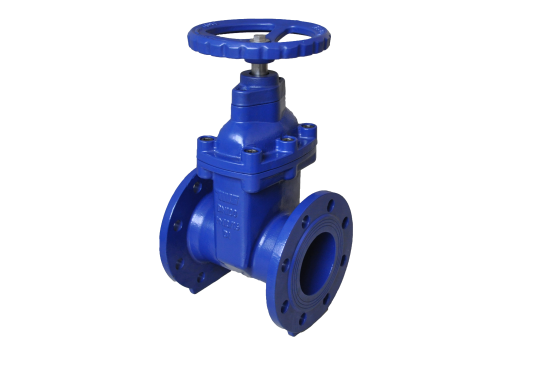
2. What is the non-rising stem gate valve?
The stem nut of the concealed stem gate valve is connected to the gate plate and fixed on the lower end of the valve stem. When opening and closing, the valve stem only rotates to drive the gate up and down. The threads of the valve stem are always hidden inside the valve body and are not exposed when opening and closing. Therefore, the valve opening cannot be directly judged from the appearance.
3. How to quickly distinguish between OS&Y gate valve and non-rising stem gate valves based on their appearance?
Check whether the valve stem is exposed – during the opening and closing process of the rising stem gate valve, the valve stem will extend up and down or retract, and the threads are visible; the stem of the concealed stem gate valve always rotates at a fixed height, and the threads are not exposed. If the valve stem is exposed more and has threads when the valve is fully open, it is a rising stem gate valve; if the height of the valve stem remains basically unchanged, it is a concealed stem gate valve.
4. Why is the stem thread of non rising stem gate valve easily damaged?
Because the threads are immersed in the medium for a long time and are in direct contact with the fluid, if the medium is corrosive, the threads are easily corroded. At the same time, impurities and particles in the medium enter the thread gap, which will increase wear and affect the opening and closing flexibility and sealing performance. In comparison, the threads of rising stem gate valves are exposed and exposed to the atmosphere, making them easier to maintain.
5. What are the differences in installation space requirements between the two resilient seated gate valve?
Rising Stem Gate Valve: requires a larger vertical installation space, because the valve stem will extend upward with the degree of opening. When fully open, the extended length of the valve stem is approximately 1.5 to 2 times the height of the valve, and sufficient space must be left at the top.
Non Rising Stem Gate Valve: The height of the valve stem is fixed, and only the turning radius of the operating wrench needs to be considered during installation, and is not subject to height restrictions. It is more advantageous to use in underground pipelines, tunnels or confined spaces.
6. What are the differences in judging the switching status of the two ductile iron gate valve?
This is the most critical usage difference between the two. The opening of the rising stem gate valve can be directly determined from the extended length of the valve stem. The opening and closing status is clear at a glance, which is very friendly to operators and dispatch management. The switch status of the non-rising stem gate valve cannot be judged from the appearance. It must be judged by the number of rotations of the handwheel or the installation of a switch indicator. Where precise flow control is required, rising stem gate valves have more advantages.
7. What are the applicable scenarios for the two gate valves?
OS&Y Gate Valve: It is suitable for situations where the vertical space is not limited, such as above-ground pipelines, pump rooms, water plants, industrial workshops, etc., as well as working conditions that require opening indication. The medium can be water, steam, oil, etc., and its corrosion resistance is better than that of non-rising stem gate valve.
Non-rising Stem Gate Valve: It is suitable for underground pipe networks, tunnels, underground mines, explosion-proof places and other occasions with limited vertical space. It is often used in municipal water supply, fire protection pipelines, etc. Because the valve stem thread does not come into contact with the medium (or has little contact), it is suitable for media with more impurities or less corrosive media.
Post time: Sep-17-2026


