
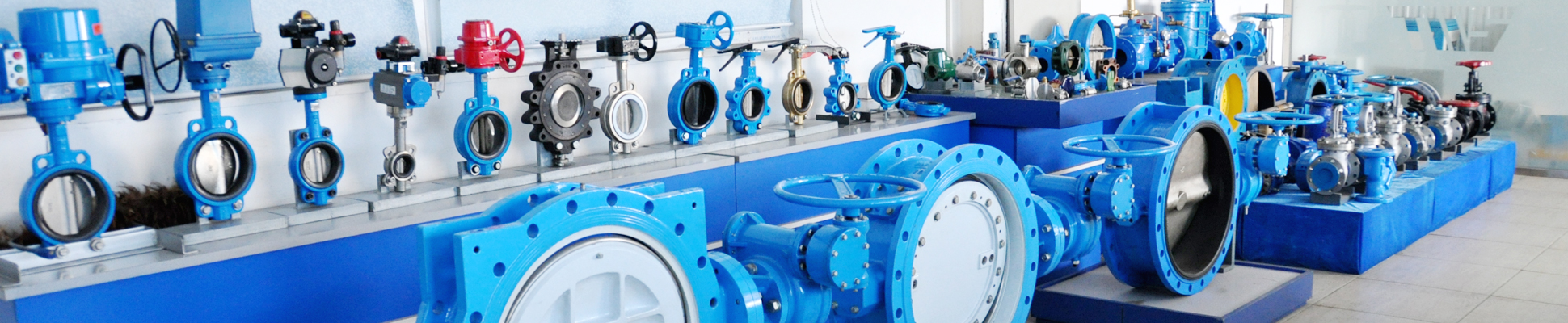
I. When to Choose Butterfly Valves?
Butterfly valves are not universal, but they offer extremely high cost-effectiveness in the following situations:
|
Selection Basis |
Applicable Scenarios |
Description |
|
Pressure loss requirements are not strict |
Water treatment, cooling water circulation, fire protection system |
The pressure loss across a butterfly valve is about three times that of a gate valve; for systems insensitive to pressure loss, this difference is irrelevant. |
|
Large-diameter pipeline |
Water supply and long-distance water transmission for pipes of DN1000 and above |
Its compact structure makes it easy to manufacture in large diameters, and triple-eccentric butterfly valves can also replace certain gate valves. |
|
Quick opening and closing |
Emergency Shutdown and Automation Systems |
90°Full open/full close, double/ triple eccentric with high sealing performance, can replace some ball valves |
Selection based on temperature and pressure:
|
Type |
Working Conditions |
Typical Applications |
|
Concentric butterfly valve |
Normal temperature & pressure |
Water pipelines, low-pressure gas, fire protection pipe networks |
|
Double-eccentric butterfly valve |
Medium temperature & pressure |
Steam pipelines, hot and chilled water circulation systems |
|
Triple-eccentric butterfly valve |
High temperature & pressure |
High-temperature gases and mildly corrosive media; can replace some ball valves. |
II. Concentric vs. Double-Offset: Friction Is the Core Difference
Concentric butterfly valves feature a disc centerline aligned with the valve body. Although this simple, low-cost design ensures sealing, the constant contact causes the disc to scrape the seat during operation, leading to higher friction and potential wear over time.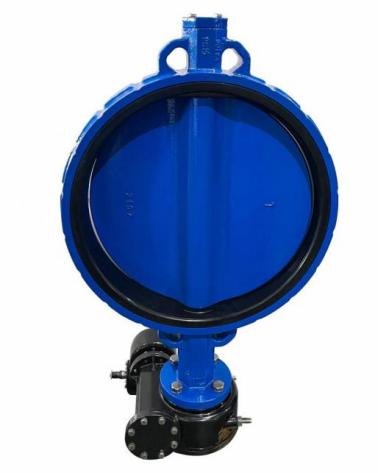
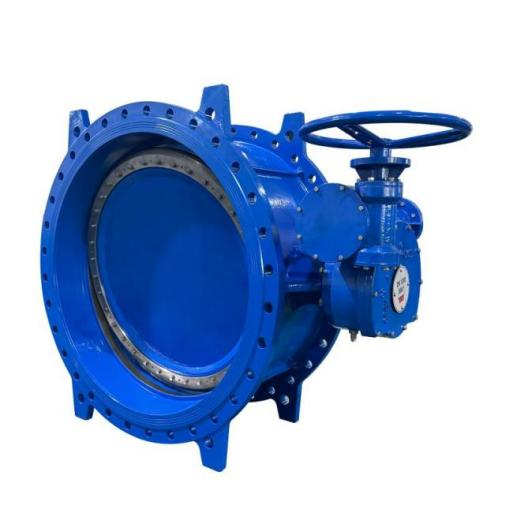
Double-eccentric butterfly valveThere are two offset points, and the sealing surface during opening and closing.Separate first, then contact., reducing friction by approximately 90% and significantly extending service life.
|
Comparison Item |
Concentric Butterfly Valve |
Double-eccentric Butterfly Valve |
|
Friction |
Constant contact leads to significant wear. |
Separation followed by recombination reduces wear by 90% |
|
Cost |
cheap |
More expensive |
|
Applicable operating conditions |
Normal temperature & pressure |
Medium temperature & medium pressure |
|
Typical Scenario |
Municipal water supply, general industrial pipeline network |
Steam, industrial circulating water |
If money is no object and longevity is paramount—double eccentric; if budget is tight and operating conditions are mild—centerline.
III. Wafer vs. Flanged: Installation Method Determines Reliability
Wafer butterfly valve—The valve body has “ears” and is clamped between pipes on both sides, secured with long bolts passing through.
- Advantages: Thin, affordable, and space-saving
- Disadvantages: The seal depends entirely on how tightly the bolts are tightened; if the pipe ends on both sides aren’t aligned, they’ll be crooked, causing leaks, binding, or even preventing installation.
- Applicable: Applications with limited space and low pressure, such as fire protection piping in underground parking garages and chilled water systems in shopping malls.
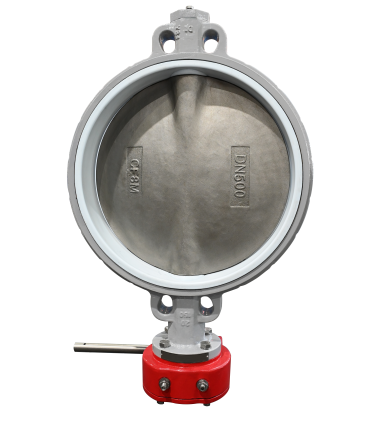
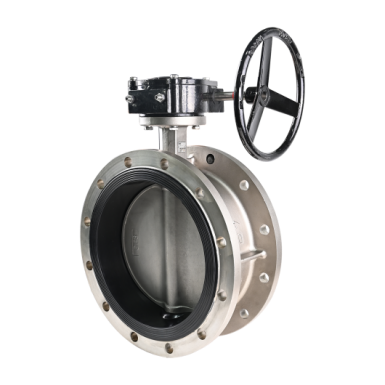
Flanged butterfly valve—has its own flange face and is directly bolted to the pipeline.
- Advantages: Stable structure, reliable sealing
- Disadvantages: Takes up space, expensive
- Applications: Chemical plant raw material pipelines, power plant cooling systems, powder conveying, and other industrial occasions with pressure, vibration, and corrosion
IV. Common Faults
|
Fault Phenomenon |
Possible Causes |
Handling Method |
|
It still leaks air even when closed. |
Seal ring aging/wear/scratches |
Inspect the sealing ring for deformation or scratches and replace it promptly; for metal seals, the sealing surfaces can be polished. |
|
The switch is getting harder and harder to operate. |
The valve stem lacks lubrication, and impurities have accumulated on the valve seat. |
Apply a corrosion-resistant lubricant every 3 to 6 months and clean deposits from the valve seat (do not scrape with metal tools). |
|
Vibration or unusual noise |
Excessive flow velocity impacts the valve plate, causing the sealing ring to loosen. |
Adjust the flow rate, check the tightness of the seals, and replace them if necessary. |
|
Pneumatic/Electric actuation is slow |
The air supply contains water, the signal cable has poor contact, and the limit switch is malfunctioning. |
Clean the gas supply drain, inspect the signal cables, and adjust the limit switches. |
|
Lining coming loose |
Corrosion-resistant materials are eroded by the medium. |
Replace the lining; prioritize fluoropolymer-lined butterfly valves, ensuring operating conditions remain within the material’s tolerance limits. |
V. Applications in Wastewater Treatment Plants
Concentric soft-sealed butterfly valves can be found almost everywhere in wastewater treatment plants—they’re inexpensive. It can withstand 1.6 MPa. But precisely because it is used so often, it also breaks down most frequently.
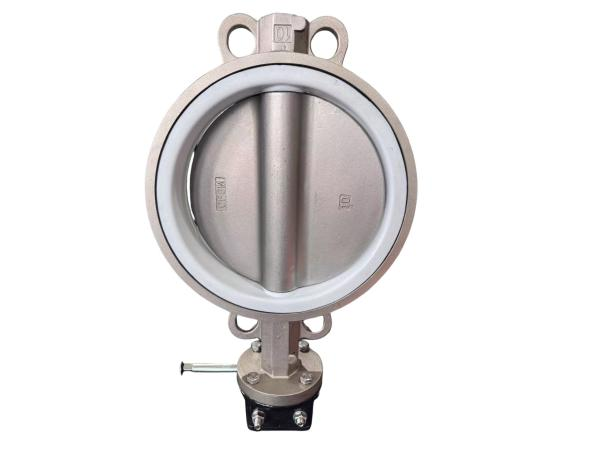
The primary cause—the sealing ring. The iron plate rotates on the centerline, and sealing relies on a ring of rubber. Every opening and closing scrapes it once. If the water has no particles, it is still acceptable; but with sand and mud, the rubber directly becomes a wear part, developing grooves and starting to drip in less than a year. Even worse is chemical corrosion: sodium hypochlorite plus high temperature causes EPDM to age and crack directly.
Solutions:
1. Change material: EPDM → PTFE sealing ring, with significantly improved corrosion resistance, suitable for dosing and sun-exposure sections
2. Change the structure: Switch to double-eccentric or triple-eccentric metal-seated butterfly valves; the sealing surfaces clear particulates during opening and closing, rely on no rubber, and offer wear, pressure, and corrosion resistance.
VI. Two types of special butterfly valves
Ventilation Butterfly Valve
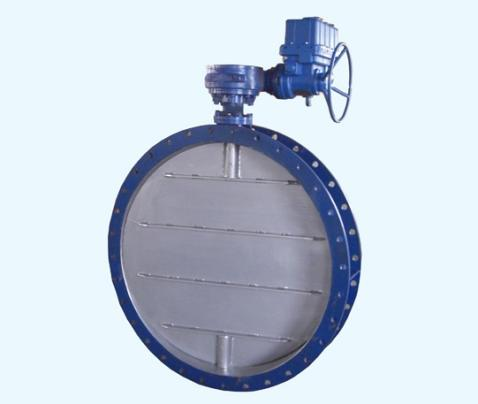
Specializing in air, flue gas, and dust-laden gas streams (boiler flues, fan supply air, dust collection systems). The key difference from industrial butterfly valves:
|
Comparison item |
Industrial butterfly valve |
Ventilation butterfly valve |
|
medium |
Water, steam, oil products |
Air, flue gas, dust-laden airflow |
|
Pressure |
High |
Low (a few kilopascals) |
|
temperature |
Regular |
Can reach 400~500°C |
|
Structure |
Castings/Forgings, Heavy |
Welding of thin steel plates, lightweight |
|
Caliber |
Large caliber, heavy weight |
Can easily reach several meters |
|
Sealed |
Pursuing zero leakage |
Allowing some leakage, focusing on weight distribution |
|
Price |
About 3 times taller on a like-for-like basis+ |
cheap |
Pneumatically Actuated Expanding Butterfly Valve
Specifically for Powder Particle Operating Conditions Design. In a conventional centerline butterfly valve, the disc presses against the sealing ring when closing, and once particles enter the sealing area, wear increases progressively. The ingenuity of the expanding butterfly valve lies in:When uninflated, the sealing ring retracts, and the valve plate rotates without rubbing against the valve seat.; After the valve is fully closed, inflate it to allow the sealing ring to expand and tightly press against the valve plate, completing the seal.
Post time: Nov-21-2026


