
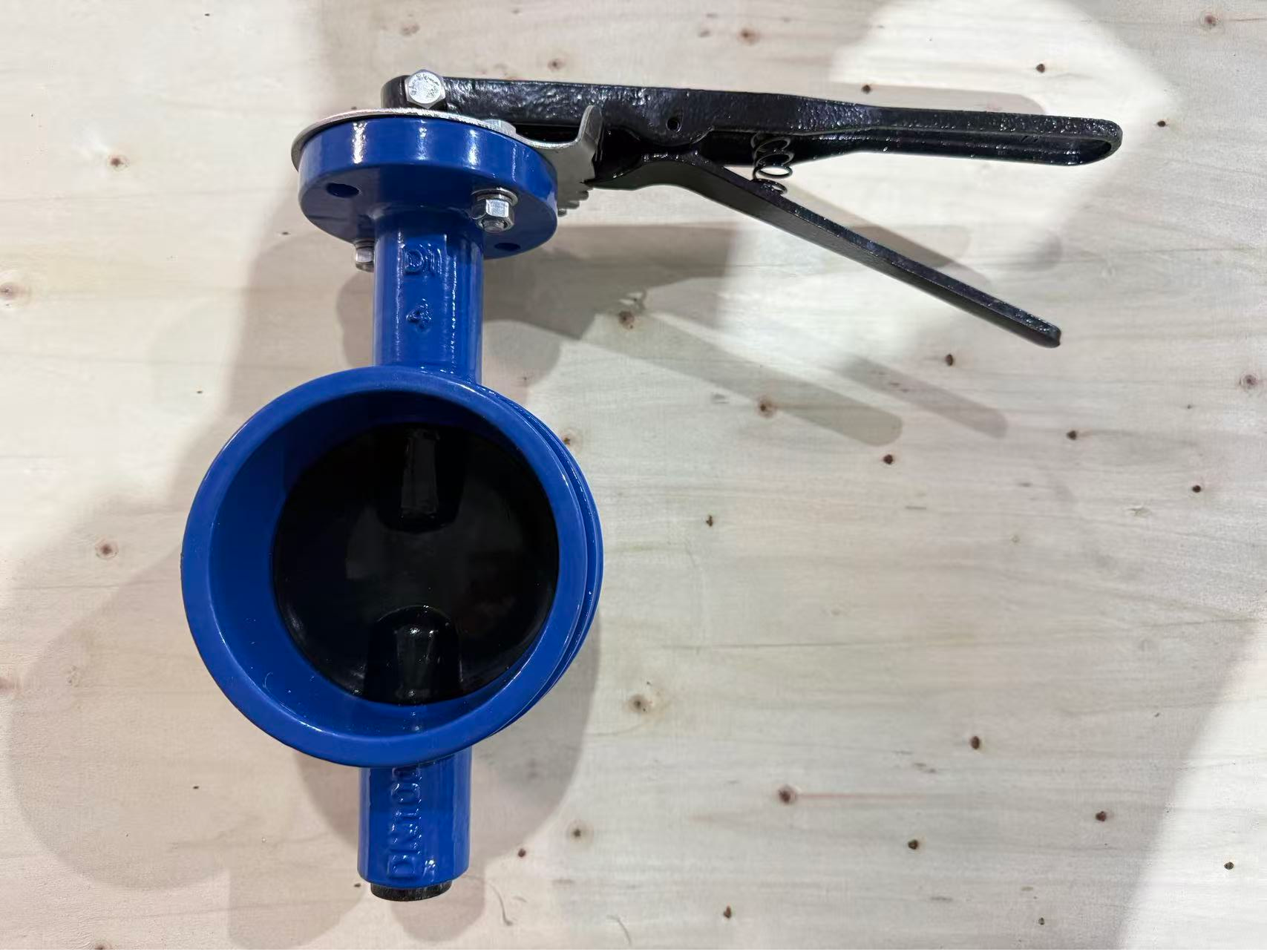
1. What is a grooved butterfly valve? What are its core strengths?
The grooved butterfly valve is a butterfly valve that uses a clamp connection method. Its core advantage is that it is extremely convenient to install and disassemble, without the need for complicated welding or threading operations. This “quick release” feature makes it particularly suitable for applications requiring frequent cleaning and maintenance, such as the food, pharmaceutical and chemical industries. At the same time, it is compact in structure, light in weight, and has good flow regulation characteristics.
2. In what fields are grooved butterfly valves mainly used?
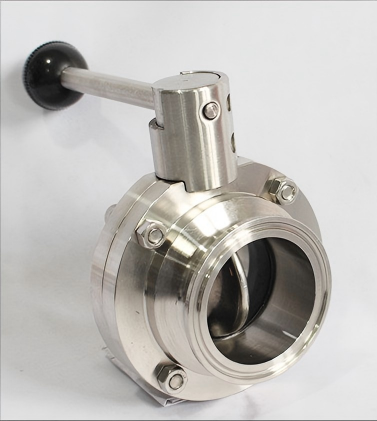
Its applications are very wide. In the food, beverage and pharmaceutical industries, sanitary grooved butterfly valves are used in clean pipelines because they are made of stainless steel and food-grade sealing rings. In municipal water supply, fire protection and sewage treatment systems, it is used to control water flow and as a shut-off valve. In addition, it is also suitable for corrosive or neutral medium transportation pipelines in chemical industry, petroleum and other fields.
3. How to choose the sealing material of grooved butterfly valve?
The choice of sealing material depends on the characteristics of the medium. For hygienic working conditions such as food, beverages or pharmaceuticals, food-grade silicone or EPDM (ethylene propylene diene rubber) is usually used. If the medium is corrosive, a sealing ring made of PTFE (polytetrafluoroethylene) should be used. Under general working conditions, EPDM rubber is also widely used because of its good aging resistance and sealing properties.
4. What are the taboos and precautions when operating the grooved butterfly valve?
Please note during operation: avoid long-term operation at an opening less than 10%. At the same time, it is recommended that the maximum opening be controlled within 60° to avoid the unstable torque area to extend the life of the valve. It is strictly prohibited to use media containing hard particles (such as gravel), which will seriously damage the sealing surface. In addition, it is necessary to confirm the valve’s pressure rating and temperature range (usually -20℃~+70℃) to avoid valve plate deformation caused by high pressure difference.
5. Conclusion
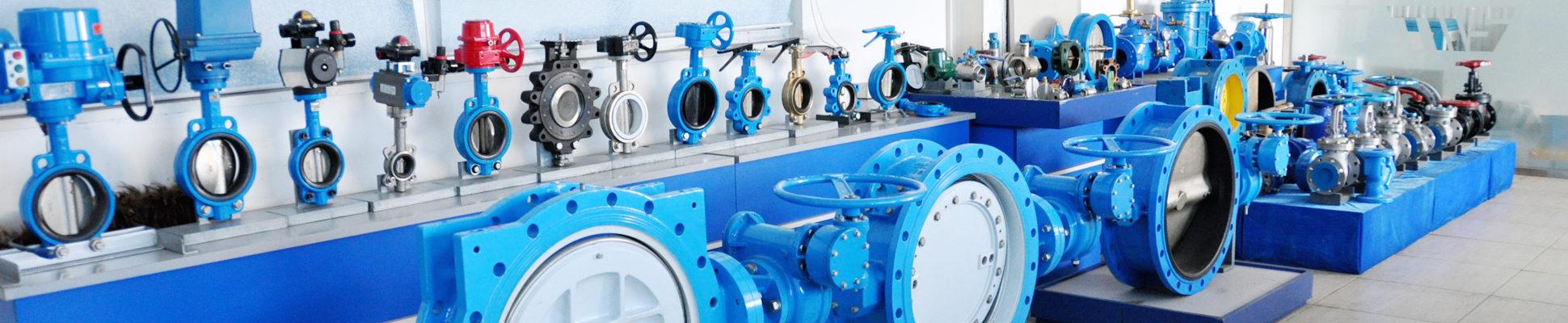
TWS has mature technology and rich application experience in the field of grooved butterfly valves. Not only that, our product line has fully covered various butterfly valves such as wafer butterfly valves, lug butterfly valves, flange butterfly valves, etc., and we have also accumulated profound industry experience in the R&D and manufacturing of gate valves and check valves. No matter what kind of valve solution you need, we welcome you to come for consultation and we will provide you with professional and reliable service.
Post time: Aug-12-2026


